As parents, we constantly seek ways to enhance our children's development and set them up for lifelong success. Mental math is more than just solving equations; it is a fundamental skill that improves memory, concentration, and problem-solving abilities. If you are wondering how to introduce this crucial skill outside the classroom, this guide is for you. Here are five simple ways parents and educators can start mental math practice at home.
1. Create a Distraction-Free Environment
Child development thrives in environments optimised for focus. Designate a specific, quiet area in your home strictly for learning.
2. Incorporate Math into Daily Activities
You do not need a textbook to practice mental math. Engage your child during grocery shopping by asking them to estimate the total cost or calculate the change. Cooking is another excellent opportunity to teach fractions and measurements. Integrating numbers into daily routines makes learning organic and less intimidating.

3. Use Visual Aids and the Abacus
Children are highly visual learners. Before they can perform complex mental calculations, they need to visualise the numbers. Tools like the abacus are highly effective in bridging the gap between tangible counting and mental math. The abacus helps children visualise beads in their minds, drastically improving their calculation speed and accuracy over time.
4. Celebrate Small Wins to Build Confidence
Patience and positive reinforcement are vital for parents teaching new concepts. Celebrate the small victories, whether it is memorising a multiplication table or solving a problem faster than yesterday. Confidence is the fuel that keeps children motivated to tackle more advanced mental math challenges.
5. Stay Consistent with Short Daily Sessions
When it comes to mastering mental math, consistency outweighs duration. Rather than gruelling hour-long tutoring, opt for 10 to 15 minutes of daily practice. Short, engaging sessions prevent burnout and help solidify neural pathways, leading to better long-term retention.
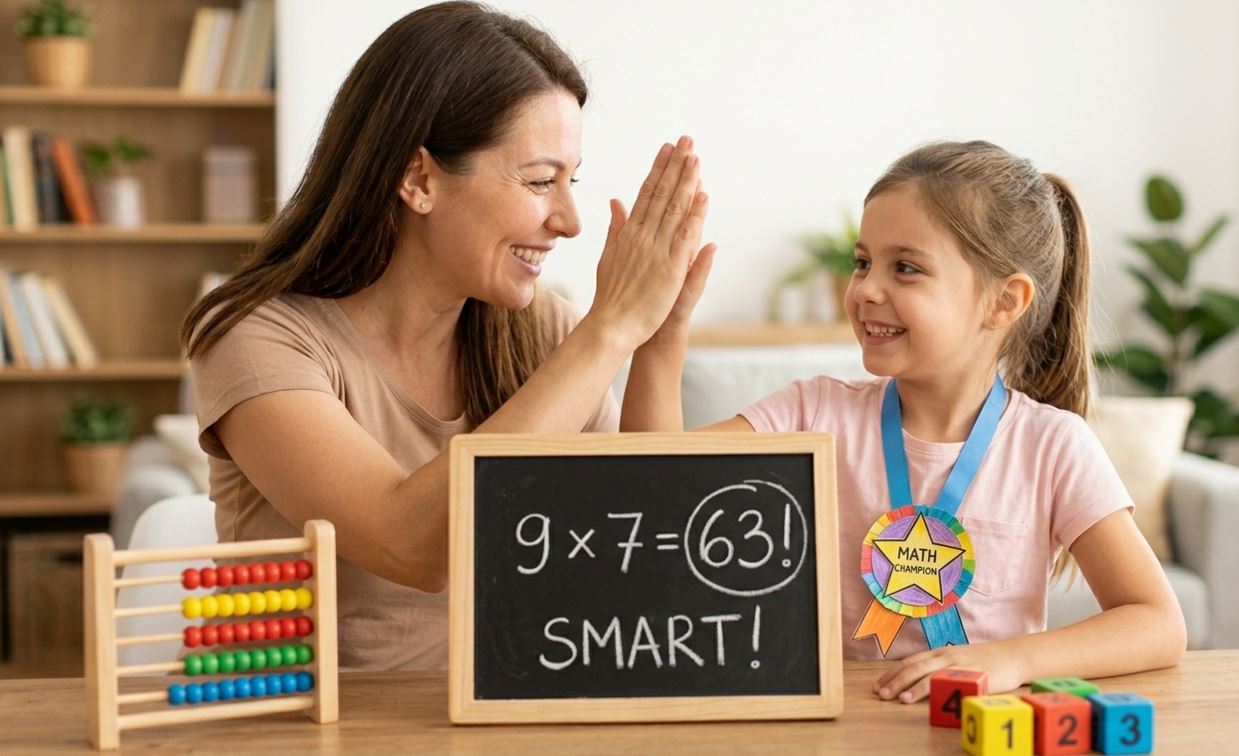
Mental math at home is all about daily habits, not long hours. By keeping practice short, fun, and part of your routine, you help your child build a lifetime of confidence and sharp thinking. Just 15 minutes a day is all it takes to start seeing big results.